
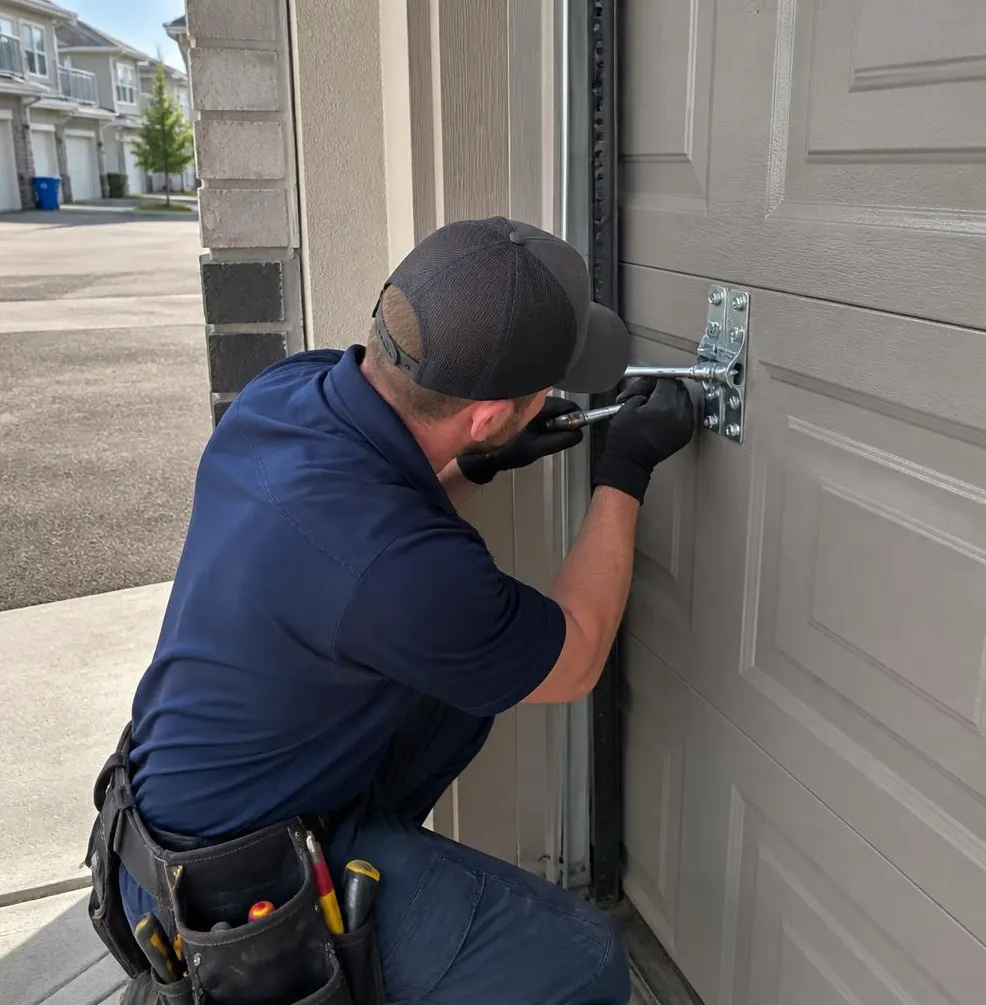
If only one panel is damaged and the rest of the door is sound, repairing that single panel is almost always the cheaper, faster fix. The exceptions come up often around here: when rust has already spread past the damaged section, when the door is old enough that a matching panel no longer exists, or when the damage is really a symptom of worn springs, tracks, or hardware rather than a one-time accident.
What a Single Panel Repair Involves
A technician unbolts the damaged section, orders a replacement panel that matches your door's style and color, and swaps it in without touching the rest of the door. This works best for damage with an obvious, isolated cause: a dent from a car bumper, a crack from a chunk of ice sliding off the roofline, or a hole from a stray branch in a summer storm.
- Cost: Lower than full replacement, since you're only paying for one section plus labor.
- Timeline: Can be quick if the panel is a common style, but special-order colors or older profiles can take one to three weeks to arrive.
- Trade-off: Years of sun on one side of the door and road salt spray near the bottom cause uneven fading and pitting. A brand-new panel next to older, weathered ones can look noticeably different even when the style matches exactly.
- Limitation: It only fixes what's visibly broken. It won't address a door that's generally tired — thin insulation, failing weatherstripping, or springs rated for a lighter, older door.
What Whole Door Replacement Involves
This means removing the entire door, installing a new one, and resizing the springs to match the new door's weight. Openers usually get reprogrammed and sensors realigned at the same time. It's the right call when the damage points to a bigger issue.
- Cost: Higher upfront, typically a few thousand dollars depending on size, material, and insulation level — but it resets the clock on the whole system at once.
- Timeline: Usually a full day of installation, sometimes scheduled a week or two out depending on the door style you pick.
- Benefit: Uniform color and texture, a chance to upgrade insulation before winter (worth it if the inside of your current door feels cold to the touch or you've noticed drafts in the garage), and new springs sized correctly, which matters when steel contracts in deep cold and puts extra strain on whatever is holding the door up.
- Trade-off: It's more disruptive and more expensive than fixing one panel, and it's overkill if the rest of the door is genuinely in good shape.
Signs That Point to Replacing the Whole Door
- Rust creeping along the bottom panel edges from years of road salt and slush splashing up during the winter months — if it's spread past the damaged section, a new panel will just rust again next to it.
- The door is older than about 15 years, which is common on a lot of homes in this area, and the panel style is no longer manufactured.
- More than one panel shows damage, warping, or fading.
- You've had repeated spring or opener issues in addition to the panel damage — a sign the whole system is reaching the end of its service life, not just one section of skin.
- You're noticing cold air, drafts, or condensation inside the garage, suggesting the insulation is failing door-wide, not just at the damaged spot.
Signs a Single Panel Repair Is the Right Call
- The door is younger, generally under 8–10 years old, and otherwise in solid condition.
- The damage is a single, clear event: a backed-into bumper, a falling branch, an ice strike.
- A matching panel is still available from the manufacturer, so color and texture won't be a problem.
- The springs, tracks, rollers, and opener are all functioning normally with no recent issues.
What This Looks Like for a Typical Home Here
Most homes around Detroit, Southfield, Royal Oak, Ferndale, Dearborn, Redford Township, Oak Park, and Berkley have steel sectional doors, and the bottom one or two panels tend to take the brunt of the damage over time — road salt slush in winter, mud splash during the spring thaw, and general impact from vehicles and equipment. If your door is relatively young and the rest of it looks good, a single panel swap is a smart, budget-friendly fix. If you're looking at a door that's over a decade old with visible rust starting at the base or noticeable fading from one side getting more sun than the other, it's usually more cost-effective in the long run to replace the whole door rather than keep patching it section by section, especially before winter temperatures start putting real stress on aging springs and hardware.
When to Call Detroit Garage Door
If you're not sure whether what you're looking at is a simple panel issue or a sign of bigger trouble, that's exactly the kind of call worth making before the first hard freeze. Detroit Garage Door can inspect the damaged panel along with the tracks, springs, and opener, and give you a straight answer on whether Garage Door Repair will hold up or whether a full Garage Door Installation makes more sense for your door's age and condition. If the damage has left your door unable to close securely, our Emergency Garage Door Service can get you buttoned up right away so you're not leaving a garage exposed to cold air or moisture overnight.
If you're weighing a panel repair against a new door anywhere in the Detroit, MI metro area, give Detroit Garage Door a call — we'll take a look and tell you honestly which option fits your home.