
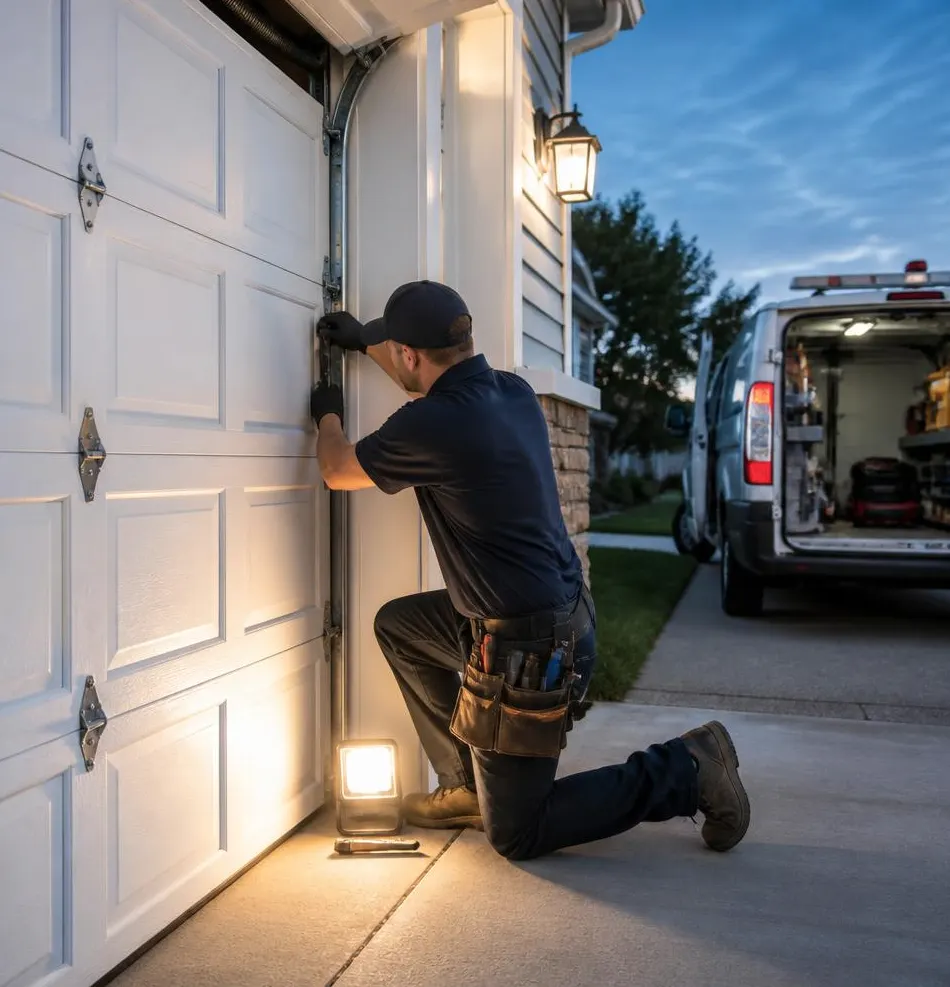
The Mistake Most Homeowners Make First
As the weather turns, most people's idea of "winterizing" the garage door is spraying some WD-40 on the track and calling it done. It's tempting because the door is working right now, the spray can is already in the garage, and it feels like you've checked the box. But WD-40 is a solvent, not a lubricant. It strips old grease away and evaporates fast, leaving moving parts drier than before, right as the cold settles in and makes everything stiffer and more stress-prone. The bigger mistake underneath that one is skipping an actual inspection because the door seems fine. A door that's worked all summer can be one hard freeze away from a snapped spring or a frozen opener that strains itself out.
Why Cold Hits Garage Doors Harder Here
Michigan winters aren't just cold, they're a cycle: deep freezes, heavy snow, ice, and months of road salt tracked in on tires and boots. Then spring brings thaw and mud, which is its own kind of stress on seals and tracks. A garage door that's never serviced has to absorb all of that through metal springs, rollers, and rubber seals that contract, stiffen, and corrode faster in these conditions than they would somewhere milder.
Springs Under More Tension
Steel contracts in the cold, and torsion springs are already under heavy tension even in summer. In deep cold, a spring that's near the end of its lifespan is far more likely to snap, often on the coldest morning of the year when you need the door most. If your springs are original to a home that's more than seven or eight years old, or if you've noticed the door feeling heavier to lift by hand, this is the time to have them checked, not in January when it's -5°F and the spring lets go.
Rollers and Tracks
Old grease thickens in the cold, which is why that WD-40 habit backfires. A lithium-based garage door lubricant stays workable at low temperatures and actually protects metal-on-metal contact points: hinges, rollers, and the torsion bar. Wipe down the tracks first to clear out summer dust and any road salt residue that's made its way in, then lubricate rollers and hinges, not the track itself.
Weatherstripping and the Bottom Seal
The rubber seal along the bottom of the door is your main defense against snowmelt, slush, and the salty water that runs off vehicles all winter. Check it for cracking, flattening, or gaps where daylight shows through. A worn seal doesn't just let in cold air, it lets in the moisture and salt that corrode the bottom of the door panel and the tracks over a full winter. Side and top weatherstripping deserve the same look, especially on garages with finished space above or a workshop that needs to stay above freezing.
Opener and Safety Sensors
Cold affects the opener's motor and any battery backup, and it can make the photo-eye sensors near the bottom of the track more sensitive to being knocked out of alignment, something that happens easily when you're shoveling or scraping ice nearby. Test the auto-reverse function by placing a block in the door's path, and clean road grime off the sensor lenses so they're not misreading a clear path as blocked.
A Simple Pre-Winter Checklist
- Test the balance: disconnect the opener, lift the door halfway by hand, and see if it holds position. If it drifts up or down, the springs need attention.
- Inspect springs and cables for rust, fraying, or visible gaps in the coils.
- Lubricate rollers, hinges, and the torsion bar with a lithium-based garage door lubricant, not a household spray.
- Replace worn weatherstripping along the bottom and sides before the first real cold snap.
- Clear and test photo-eye sensors, and confirm auto-reverse still works.
- Tighten loose hardware, roller brackets and hinges work loose from seasonal expansion and contraction.
- Check the opener's backup battery if you have one, cold weather drains them faster during power outages.
When to Call Detroit Garage Door
If the door feels unbalanced, a spring shows wear, or you just want a professional set of eyes on everything before the deep cold arrives, that's when it makes sense to call us in. Our Garage Door Maintenance visits cover the full inspection: springs, cables, rollers, tracks, weatherstripping, and opener function, so small issues get caught before they turn into a dead door on a January morning. If a spring is already showing rust or stretching, our Spring Repair & Replacement service handles that safely, which isn't a project to take on yourself given the tension involved. And if something does fail once winter sets in, our Emergency Garage Door Service means you're not stuck waiting days with an open or stuck door during a snowstorm.
Detroit Garage Door serves homeowners and businesses throughout Detroit, Southfield, Royal Oak, Ferndale, Dearborn, Redford Township, Oak Park, and Berkley. If your garage door hasn't been checked since last spring, now is the time, call us before the first deep freeze hits and get it handled before winter does.